

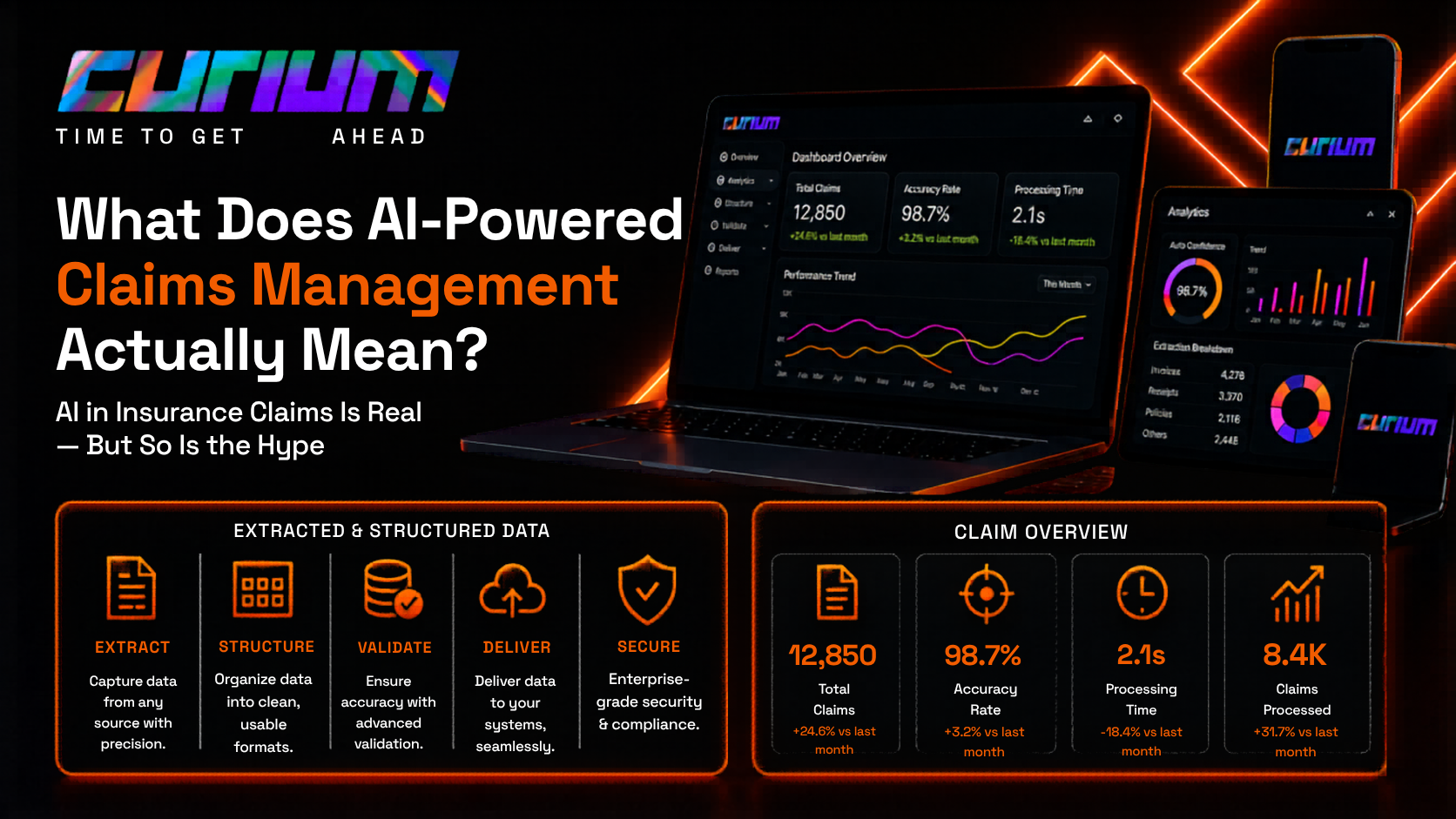
AI in Insurance Claims Is Real — But So Is the Hype
AI-powered claims management. Intelligent automation. Machine learning for risk detection. The language is everywhere in insurance right now. And a lot of it is genuine — AI is changing what’s possible in how claims are processed, assessed, and overseen.
But there’s a part of the conversation that consistently gets skipped. AI doesn’t work by magic. It works on data. And the quality, consistency, and structure of that data determines whether AI outputs are genuinely useful — or just confident-sounding guesses.
Understanding that distinction is the most important thing an insurance business can do before investing in AI for claims.
What AI-Powered Claims Management Is Actually Doing
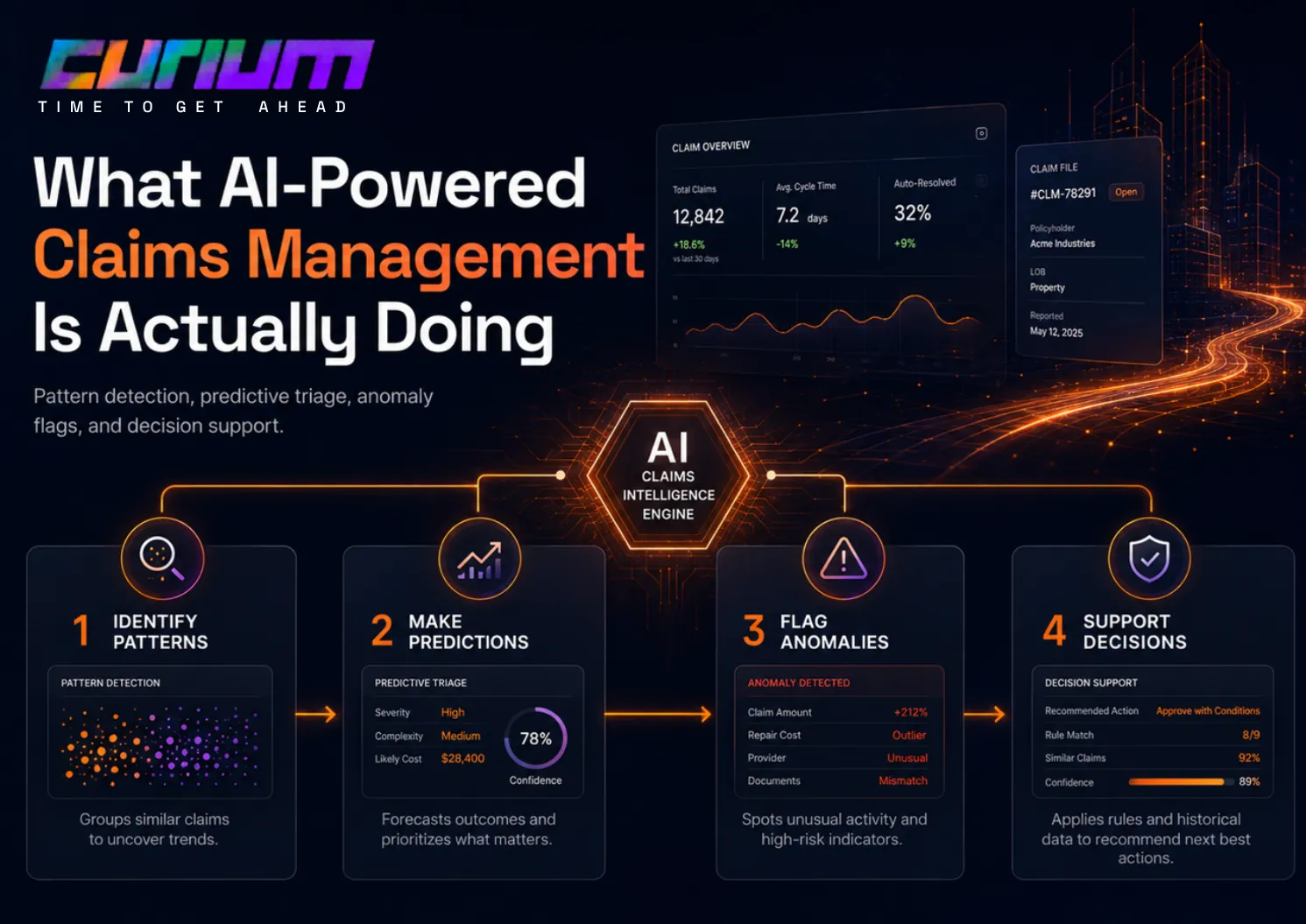
At its core, AI in claims is doing one of a few things: identifying patterns, making predictions, flagging anomalies, or automating decisions based on rules and historical data.
A fraud detection model is looking for claim characteristics that match patterns associated with fraudulent activity. A leakage detection tool is identifying where costs are drifting beyond what similar claims typically cost. A triage tool is predicting complexity and routing claims accordingly.
All of those things require the AI to read and interpret information. The question is: what information, and in what format?
See how Curium support AI-powered claims management.
Why AI-Powered Claims Needs Structured Data to Work
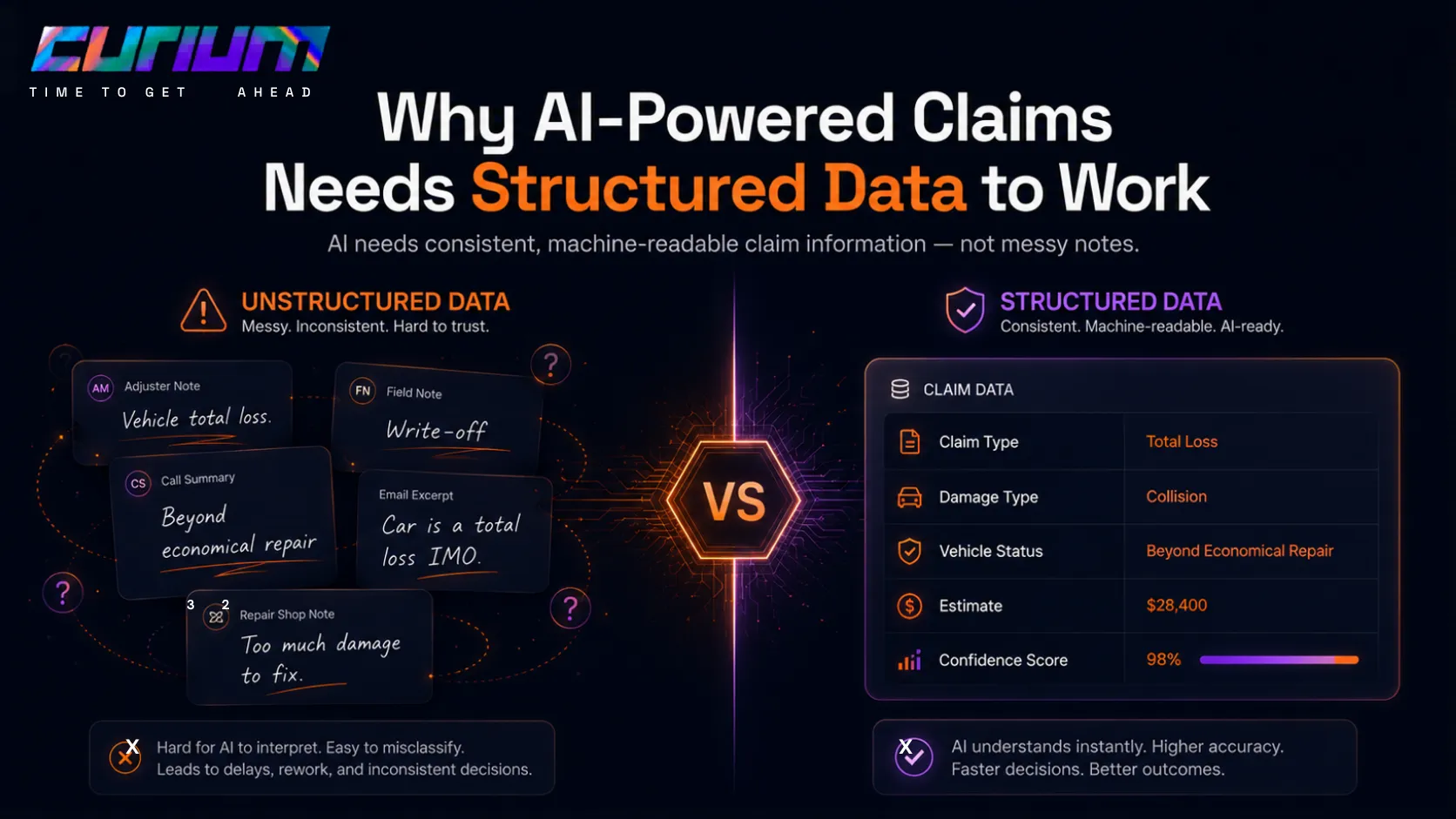
A human assessor can read a messy note, apply context, and figure out what it means. AI cannot do that reliably — not at scale, not with the precision that makes it genuinely useful. It needs information in a format it can actually work with consistently. That format is structured data.
Structured data means claim information captured in defined, consistent, machine-readable fields. Not a free-text notes section where one assessor writes “vehicle total loss” and another writes “write-off” and a third writes “beyond economical repair.” Three phrases meaning the same thing — but completely different to a system trying to read them at scale.
Structured data removes that ambiguity. It creates a consistent language that AI can actually learn from and act on.
See article about structure data.
How Structured Data Makes AI Outputs Precise Rather Than Approximate
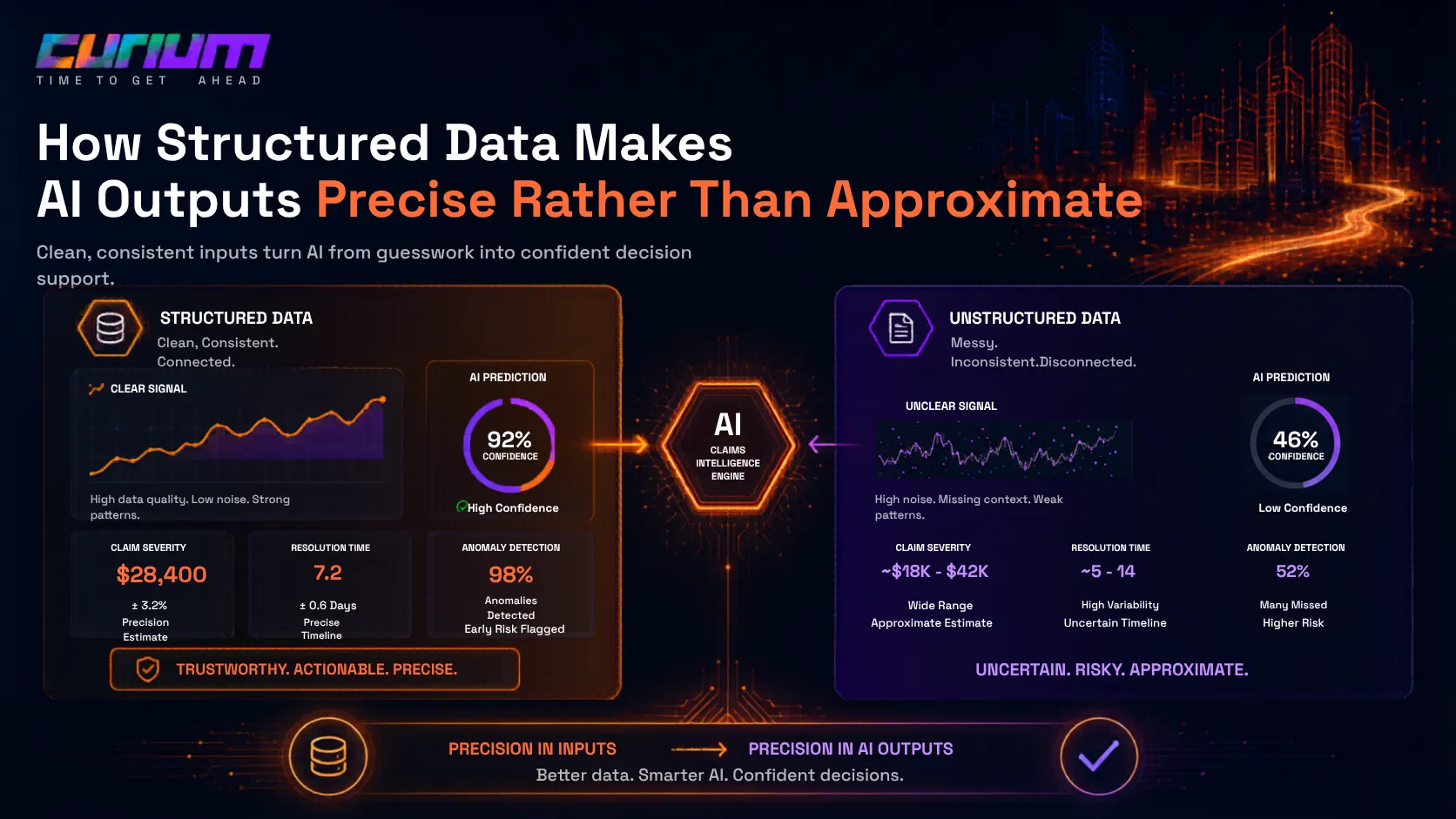
When AI-powered claims management is operating on structured data, its outputs are grounded in real, consistent information. It can identify that claims of a particular type, in a specific region, with certain damage characteristics, tend to result in a particular outcome. It can flag when a new claim deviates meaningfully from that pattern. It can estimate likely costs or timelines with accuracy that’s genuinely useful for decision-making.
When AI is operating on unstructured data — inconsistent notes, varied formats, missing or ambiguous fields — the patterns it identifies are less reliable. Predictions are less accurate. Flags it raises may be noise as much as signal. And critically, you often can’t tell the difference from the output alone.
Precision in AI comes from precision in inputs. There is no algorithm clever enough to fully compensate for poor data quality at scale.
See article about unstructured data.
What This Means for AI-Powered Claims Fraud Detection8
Fraud detection is one of the most cited use cases for AI in insurance claims — and one of the most dependent on data quality. AI fraud detection works by identifying patterns and anomalies: characteristics that appear more frequently in fraudulent claims than legitimate ones.
When claims data is structured and consistent, those patterns are detectable with meaningful accuracy. When data is unstructured and inconsistent, the signal gets lost in the noise. False positives increase. Real fraud slips through. And the “AI-powered fraud detection” investment delivers a fraction of its potential.
The AI is only as good as what it’s trained and operating on.
See how Curium catch risk early.
The Practical Question for Insurance Businesses Evaluating AI
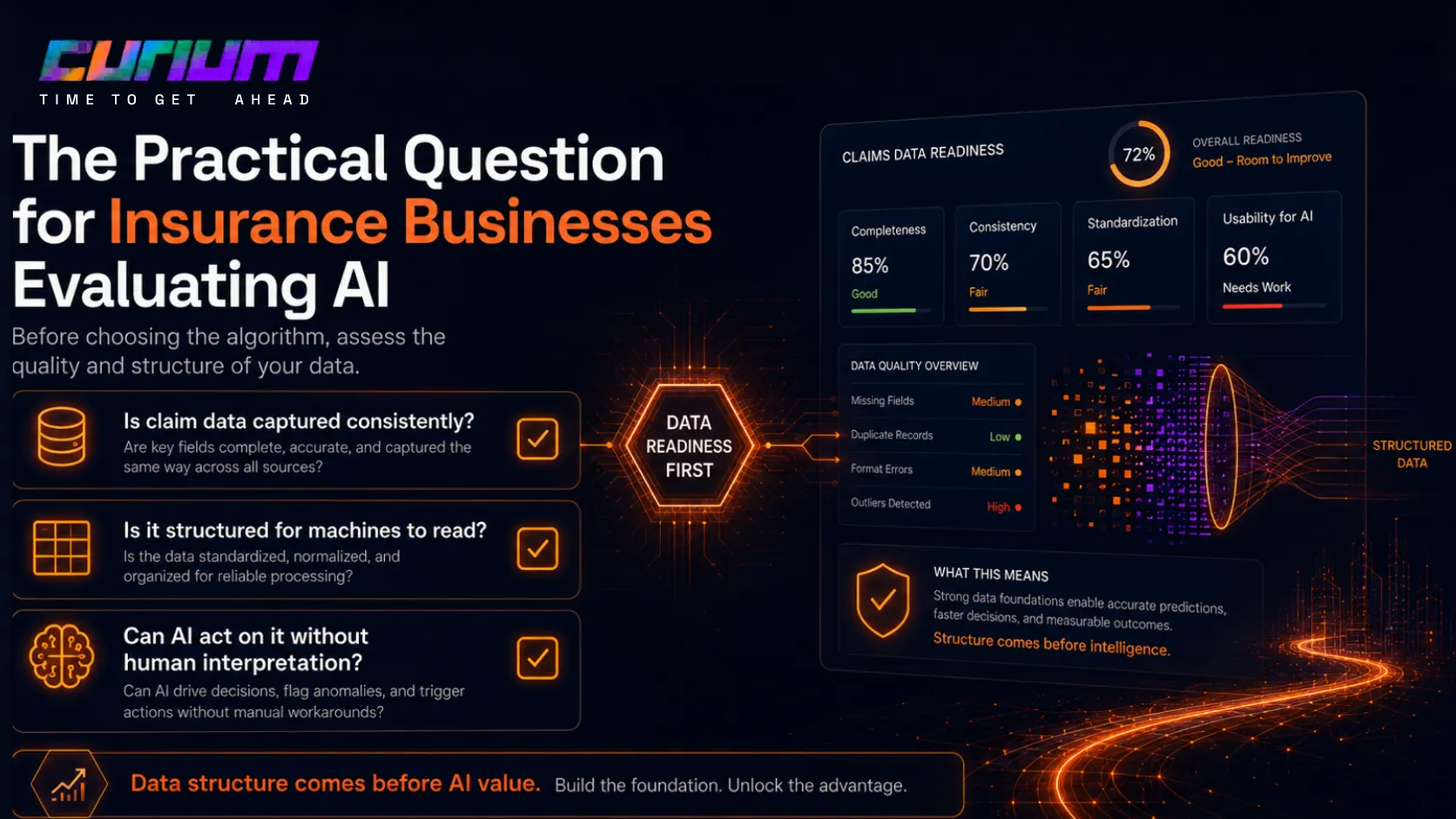
If you’re evaluating AI tools for claims management, the most important question isn’t about the algorithm or the vendor. It’s about your data.
How is claim information being captured today? Is it consistent across your team? Is it structured in a way that a system can read and act on without human interpretation? If the answer is “not really,” then AI will underdeliver — not because the technology isn’t capable, but because it doesn’t have the inputs it needs to perform.
The insurance businesses getting real, measurable results from AI-powered claims management are the ones that treated data structure as a foundation, not an afterthought. Getting that right first is what makes the AI investment worthwhile.
Frequently Asked Questions About AI-Powered Claims Management
What does AI-powered claims management actually do? It uses artificial intelligence to identify patterns, predict outcomes, flag anomalies, and automate parts of the claims process — including risk detection, fraud identification, leakage monitoring, and decision support.
Why does AI-powered claims management need structured data? AI finds patterns in data. If that data is inconsistent or unstructured, the patterns it identifies are unreliable. Structured data gives AI clean, consistent inputs — which is what makes its outputs trustworthy rather than approximate.
What is structured data in the context of insurance claims? Structured data is claim information captured in defined, consistent, machine-readable fields — the same format every time, regardless of who processes the claim. It removes ambiguity and creates a consistent language for both humans and AI to work from.
Can AI-powered claims management reduce claims leakage? Yes — when it’s operating on structured data. AI can identify patterns in cost drift and flag anomalies that human oversight might miss. But its accuracy in doing so depends directly on the quality and consistency of the underlying data.
How does AI improve fraud detection in insurance claims? By identifying claim characteristics that deviate from normal patterns. The more structured and consistent the claims data, the more accurately AI can distinguish genuine anomalies from noise — reducing both false positives and missed fraud.
How do I know if my claims data is ready for AI? Look at how information is captured. If your team relies heavily on free-text fields, inconsistent formats, or manual interpretation to make sense of claim data, that’s a strong signal that data structure needs to come before AI investment.
Is AI-powered claims management suitable for smaller insurance businesses? Yes — the underlying principle applies regardless of size. The key is having structured data to work from. Smaller businesses can often move faster on data quality improvements precisely because they have less legacy complexity to deal with.
Author:
Tetiana George, CEO of Curium, Co-Chair of Insurtech Australia and member of ASIC Digital Finance Advisory Committee. LinkedIn Profile.