

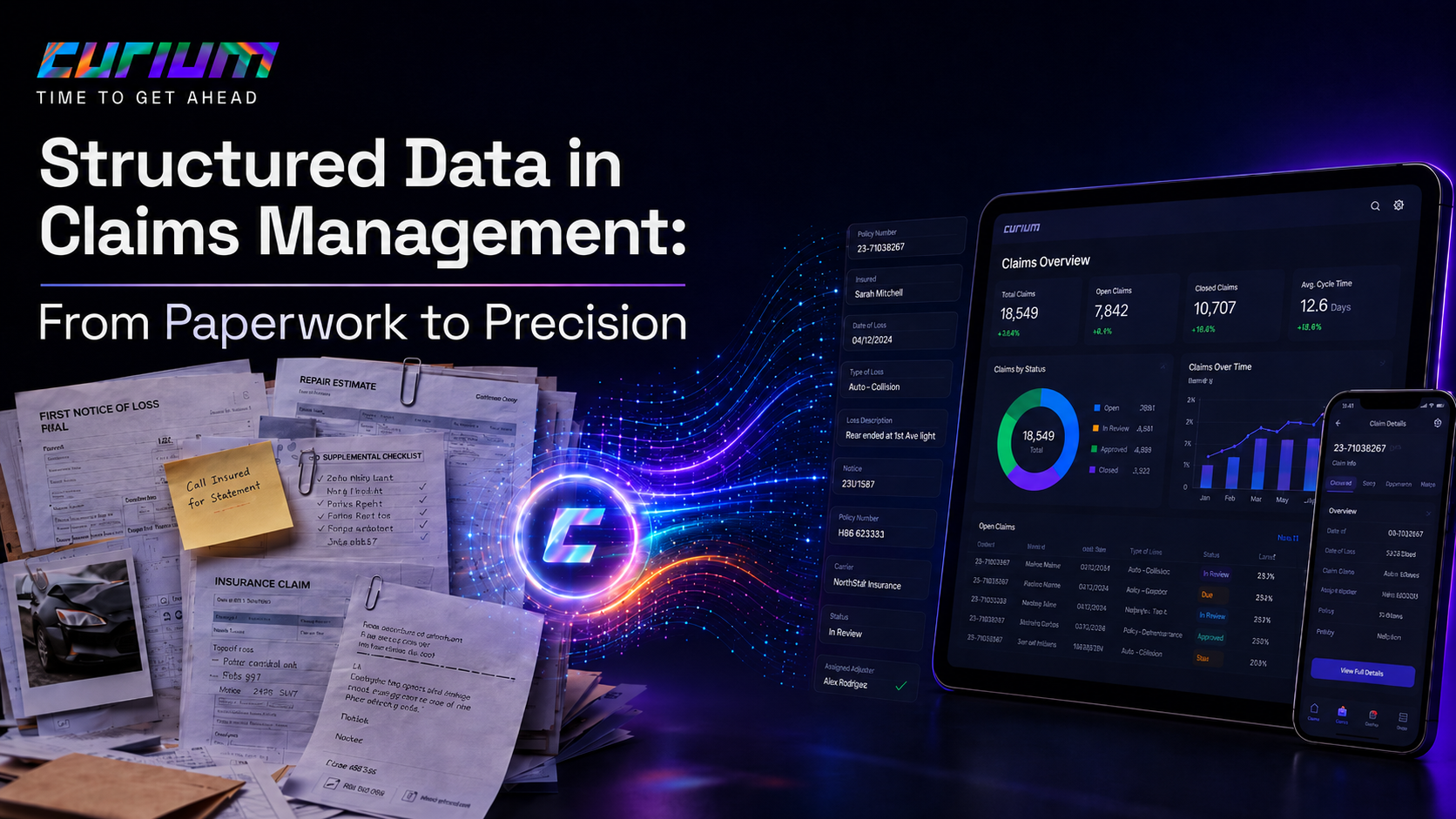
Why Structured Data in Claims Management Changes Everything
Anyone who has worked in insurance claims knows the weight of it. Forms. PDFs. Emails back and forth chasing missing information. Data entered in one system, re-entered in another. Decisions made on incomplete pictures because assembling a complete one takes too long.
The promise of technology in claims has always been to cut through that friction. But the reality has often fallen short — because the underlying data wasn’t set up to support it.
Structured data is what changes that. When claim information is captured consistently, completely, and in a machine-readable format from the moment it comes in, every part of the claims process gets faster, more accurate, and easier to oversee. Here’s what it actually makes possible.
Faster Claims Decisions Through Structured Data Capture
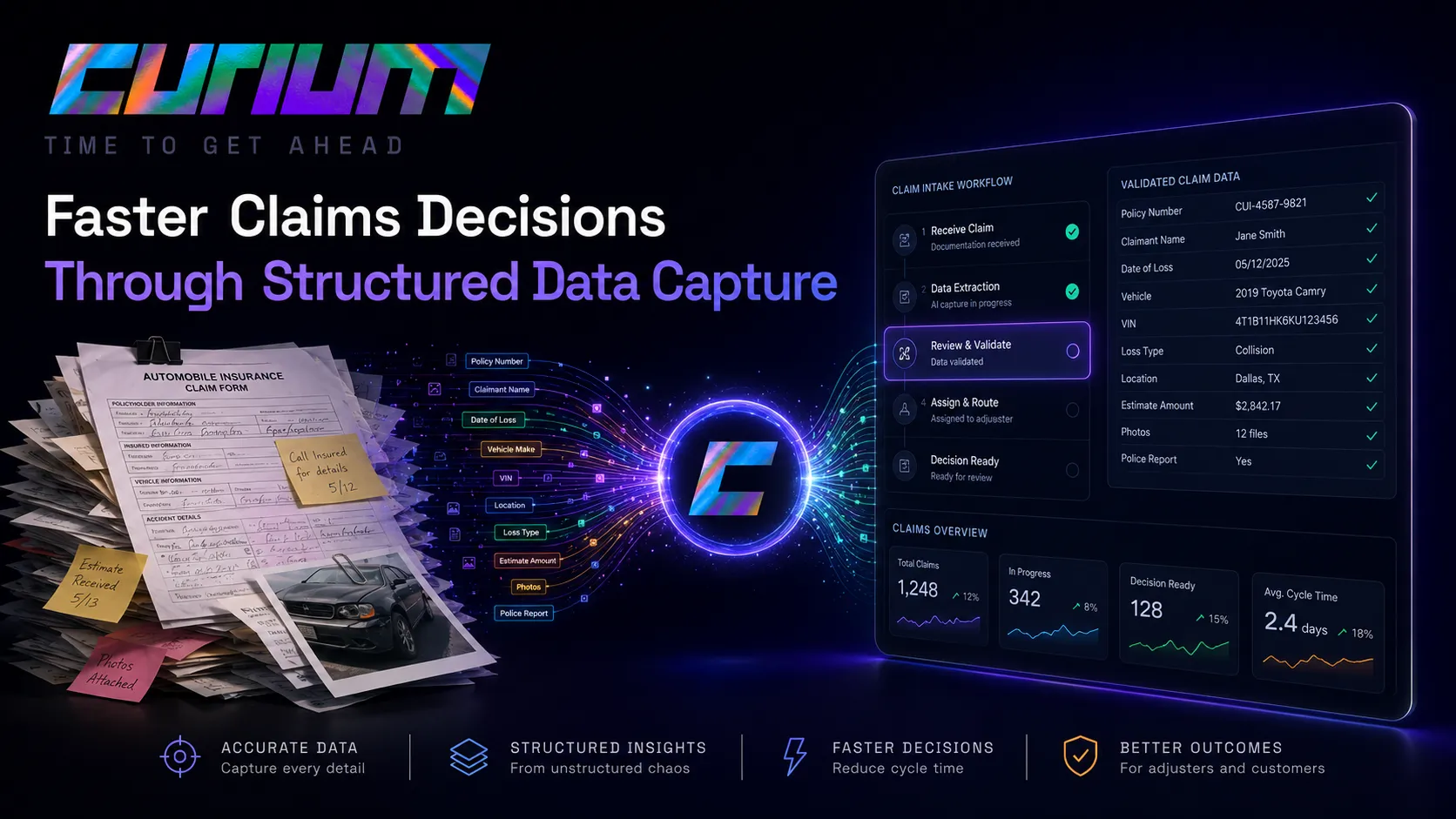
When claim information is structured from the point of capture, assessors aren’t spending time hunting for details, chasing incomplete submissions, or interpreting inconsistent notes. The information is in the right place, in the right format, ready to act on immediately.
That alone can significantly cut average claim durations. Not because anyone is cutting corners — but because the process stops being slowed down by data that needs to be found, cleaned, or re-interpreted before it can be used.
For claimants, that means faster resolution. For businesses, it means lower handling costs and better throughput without adding headcount.
Fewer Claims Errors with Consistent, Validated Data Inputs

Manual data entry is where errors happen. The wrong date. A blank field. A damage category recorded differently by two staff members. Small inconsistencies that compound over time and create downstream problems — in decisions, in reporting, and in compliance.
Structured data — captured through defined fields, validated inputs, and consistent formats — removes most of those failure points. The data that goes in is cleaner, which means the decisions and reports that come out are more reliable.
This is particularly important in regulated industries like insurance, where data accuracy isn’t just an operational concern — it’s a compliance requirement.
Earlier Risk Detection in Insurance Claims
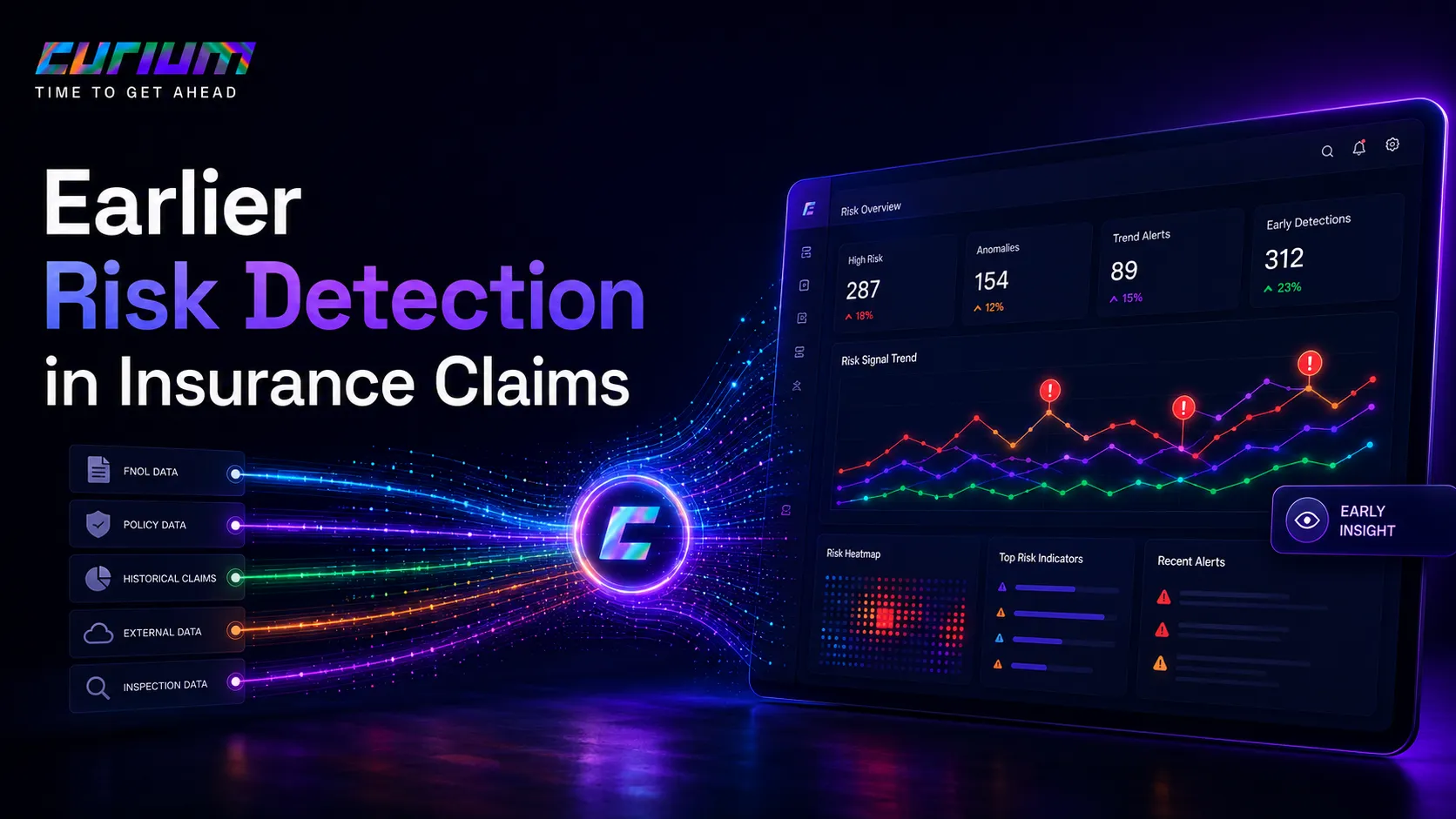
This is where structured data starts to look genuinely transformative. When every claim is captured in a consistent format, patterns become visible that simply aren’t detectable in unstructured data.
Is a particular type of claim coming in more frequently than usual? Is there a pattern in how certain claims are being assessed that suggests a process gap? Is a specific policy type generating disproportionate costs? With structured data, these questions have answers. Without it, they’re guesswork.
Early risk detection in claims isn’t just about fraud — though structured data helps there too. It’s about identifying operational and financial risks before they become expensive problems.
How Structured Data Reduces Claims Leakage
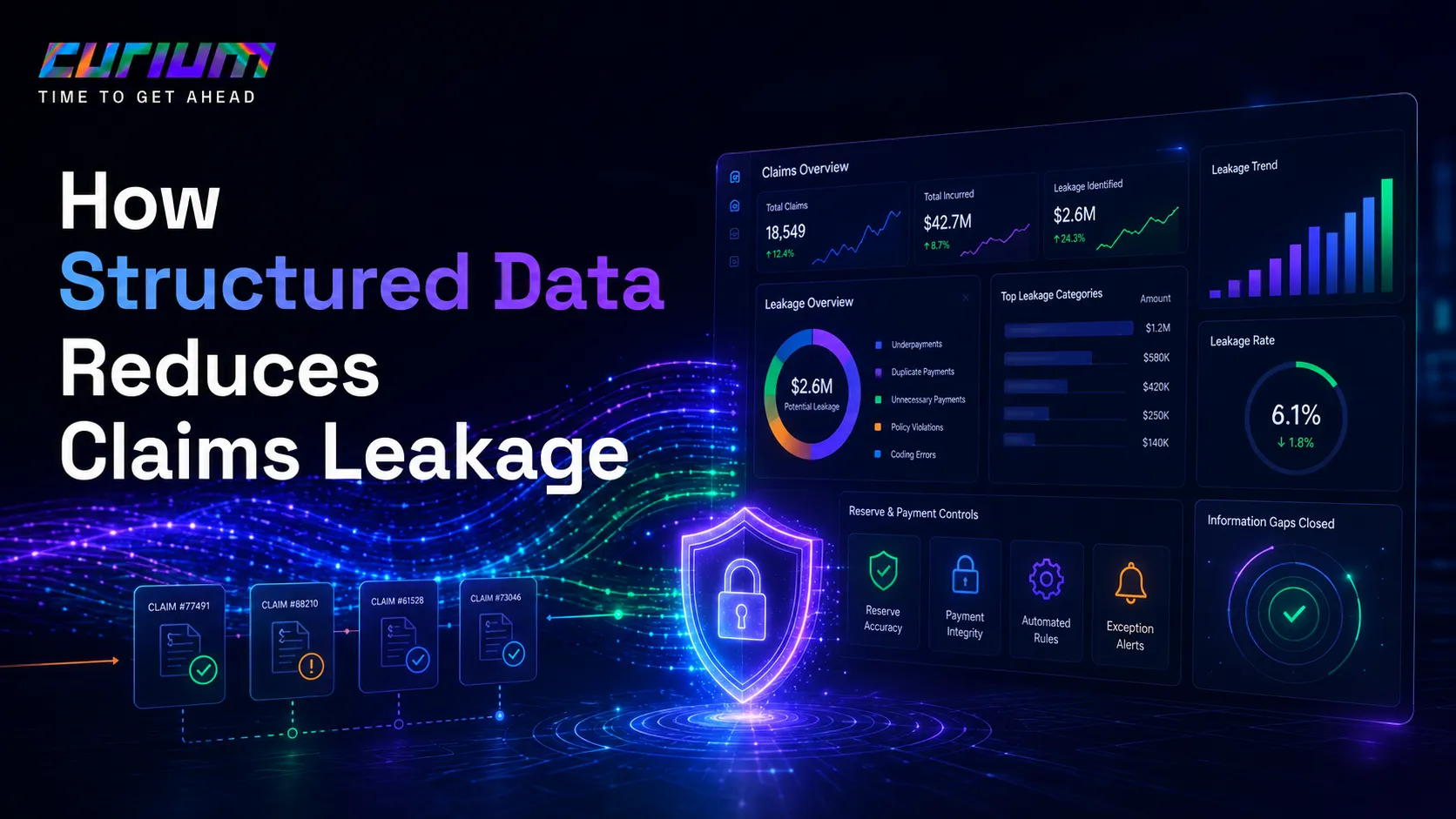
Claims leakage — the gap between what a claim costs and what it should cost — is one of the most persistent and costly problems in claims management. A significant driver of leakage is information gaps: decisions made without the full picture.
Structured data closes those gaps. When all relevant claim information is captured consistently and completely, it’s much harder for costs to drift without explanation. Oversight becomes real rather than theoretical. And when leakage does occur, it’s visible and attributable — which makes it fixable.
Structured Data as the Foundation for AI in Claims

All of the above lays the groundwork for AI to do something genuinely useful in claims management. AI doesn’t create insight from chaos — it identifies patterns in structured information. Feed it clean, consistent claims data and it can flag risks, predict outcomes, identify anomalies, and support faster decisions with real precision.
The businesses seeing measurable results from AI in claims aren’t the ones who bolted AI onto an existing data mess. They’re the ones who treated structured data as the foundation and built from there.
Structured data isn’t the most exciting part of a claims transformation. But it is the part that makes every other part work.
Frequently Asked Questions About Structured Data in Claims Management
What is structured data in insurance claims management? Structured data is claim information captured in a consistent, defined, machine-readable format — specific fields for specific information, validated inputs, and standardised entries that mean the same thing every time.
How does structured data reduce claims processing times? It eliminates time spent chasing incomplete information or interpreting inconsistent data. When claims come in structured from the start, assessors can act immediately rather than spending time on data preparation.
Can structured data in claims management reduce leakage? Yes. Structured data improves visibility into where and how costs are occurring, making leakage patterns detectable and attributable. It’s much harder for costs to drift unnoticed when data is consistent and complete.
How does structured data support AI in claims? AI needs consistent, clean inputs to produce reliable outputs. Structured claims data gives AI what it needs to accurately flag risks, predict outcomes, and identify anomalies — rather than working from incomplete or inconsistent information.
Is structured data in claims management relevant to compliance? Absolutely. In regulated industries like insurance, data accuracy and consistency are compliance requirements, not just operational preferences. Structured data supports audit trails, reporting accuracy, and regulatory obligations.
What types of claims data should be structured first? Start with the highest-volume, highest-impact fields: cause of loss, claim type, damage category, liability determination, and key dates. Getting these consistent delivers immediate benefits and builds the foundation for broader data quality improvements.
Author:
Tetiana George, CEO of Curium, Co-Chair of Insurtech Australia and member of ASIC Digital Finance Advisory Committee. LinkedIn Profile.