

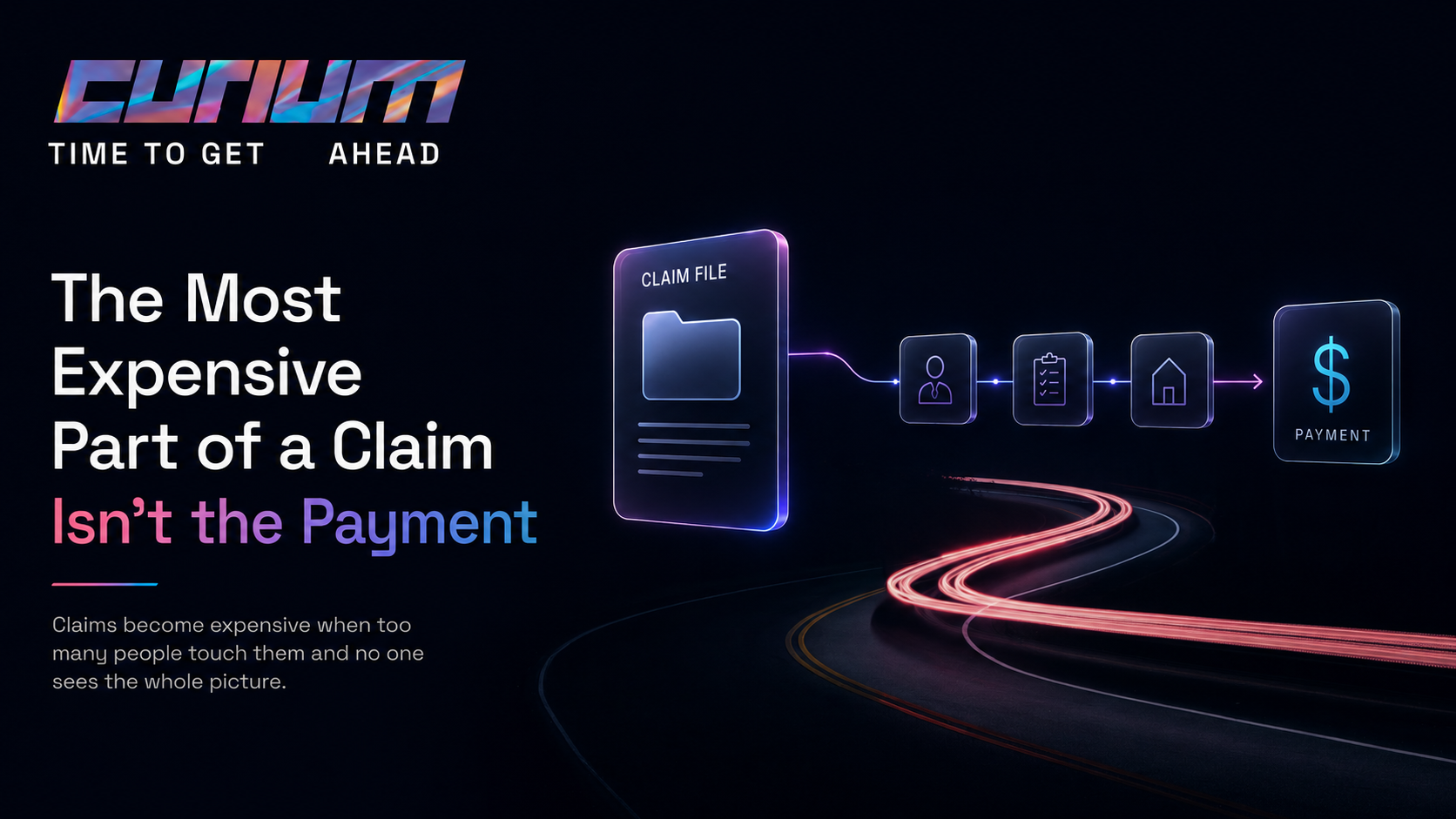
Most discussions about claims costs focus on fraud, leakage and claim payments. I think we spend far less time talking about the real problem.
Claims become expensive when too many people touch them, nobody sees the full picture and decisions keep moving from one person to another. I’ve seen property claims where close to 20 people were involved. Everyone was busy. Everyone was working hard. Yet the claim barely moved.
The most expensive part of a claim is often not the payment itself. It’s everything that happens before the payment is made.
We Focus on the Wrong Cost
Ask someone what makes a claim expensive. The answer is usually simple. The payment. A $500 claim is cheap. A $500,000 claim is expensive. End of story. But that’s not what I’ve observed. I’ve seen claims with relatively small payments consume extraordinary amounts of time, effort and money.
Not because the claim itself was complicated. Because the decision-making was. The claim bounced between handlers. More information was requested. Reports were commissioned.
Questions were escalated. Managers became involved. The customer chased updates. The same conversations happened again and again. Eventually the claim was settled.
The payment might have been reasonable. The journey certainly wasn’t.
See how Curium helps claims teams look beyond the payment amount and identify the process friction, delays and leakage that drive the real cost of claims.
Too Many Cooks in the Kitchen
One of the biggest problems in claims is that too many people are involved. Take a complex property claim. You may have a claims officer, assessor, engineer, builder, loss adjuster, restoration provider and legal adviser. Then add managers, specialists and various suppliers.
Before long, you can have close to 20 people touching the same claim. The funny thing is that every one of them is adding value.
The engineer understands the cause. The assessor understands the damage. The builder understands the repairs. The claims officer understands the policy. The problem isn’t competence. The problem is coordination.
When too many people touch the same claim, the real cost is often lost in handoffs, delays and duplicated effort.
See how Curium helps claims teams reduce friction, improve visibility and keep complex claims moving.
Nobody Sees the Whole Claim
This is where claims get stuck. The assessor writes a technical report. The claims officer reads it but doesn’t fully understand the engineering language. The claims officer understands the policy wording. The assessor doesn’t.
Neither person is completely wrong. Neither person has enough information to make the entire decision. So the claim goes back and forth. Questions become emails. Emails become meetings. Meetings create more questions.
Everyone is working. Yet nobody is truly moving the claim forward.
I’ve seen this happen countless times. The claim becomes a coordination exercise rather than a decision-making exercise.